
Lake Macquarie Financial Planning
Death Taxes: Will Your Loved Ones Pay ?

Your Superannuation or income stream investments may contain components that attract tax when paid to non-financial dependents, (for example, your adult children), when you die.
This could equate to tens of thousands of $$$ being taken from your childrens’ inheritance to be paid to the tax man!!
What if there was a way to manage that while still achieving other goals at the same time?
Well, thanks to recent legislation changes there may be a way…and we can show you how!
Click the green button to book a FREE 15 minute chat to learn more…
What is A Re-Contribution Strategy?
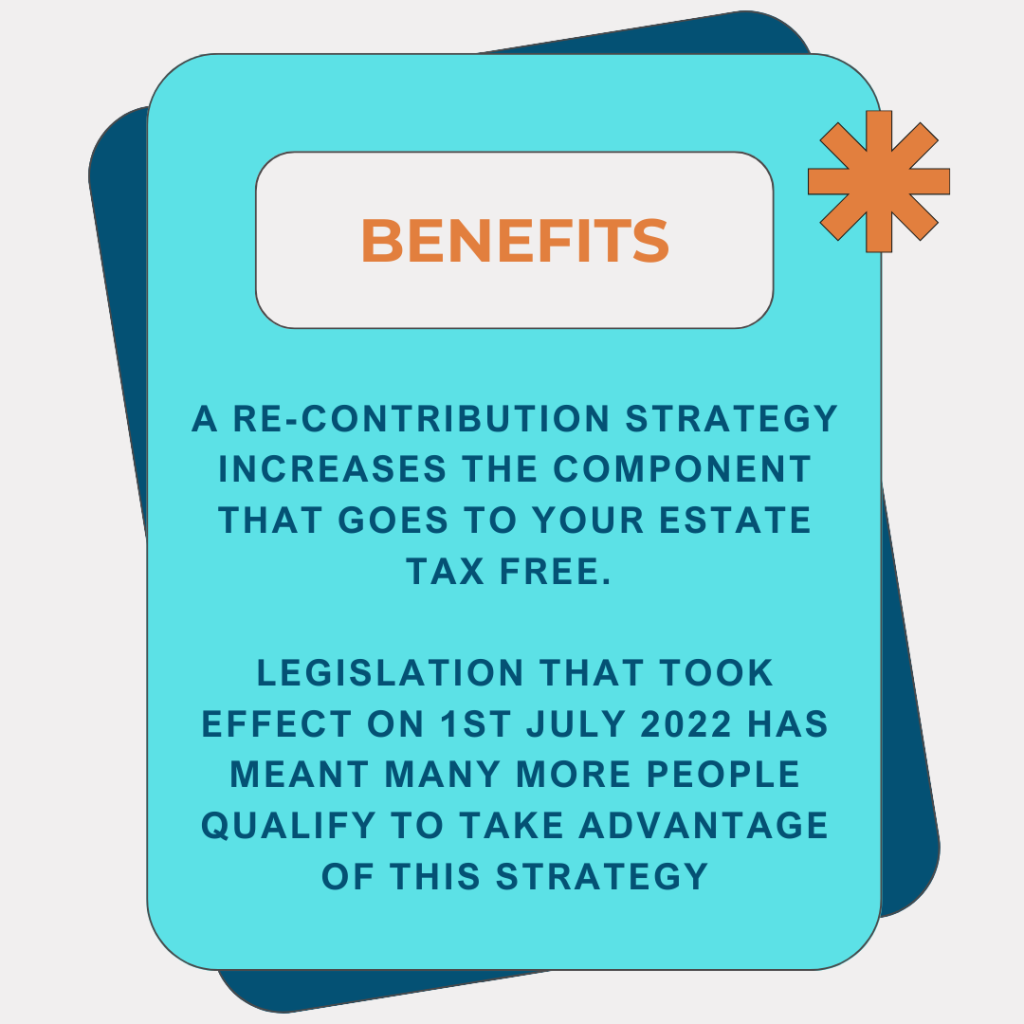
At its simplest, a re-contribution strategy is withdrawing money from your super/pension account and then re-contributing it back to super. This will change the make up of your super and can assist with managing the tax paid from your estate. See the case study below for how a re-contribution strategy can help meet your goals.
DO I NEED ADVICE BEFORE IMPLEMENTING A RE-CONTRIBUTION STRATEGY?
Absolutely!
There are strict rules about who can withdraw from superannuation, who can contribute to superannuation and what the implications could be on such things as your Centrelink benefits.
Don’t worry though, we can research the benefits and trade-offs and explain it all in writing to you in an easy to understand way!
What Is The Secret?
It is all in the tax components within superannuation, which are predominantly…
TAX FREE COMPONENT
Generally consists of contributions to super on which you have already paid tax, such as non-concessional (after-tax) contributions and associated investment earnings. No tax is payable upon the withdrawal of this component.
TAXABLE COMPONENT
Generally consist of concessional (before-tax) contributions to super such as employer Super Guarantee (SG) contributions, salary sacrifice or personal deductible contributions
CASE STUDY: Peter & Jenny

Peter, aged 68 and Jenny, aged 64 have just permanently retired from the workforce. They own their own home, Peter has $660,000 in superannuation (100% taxable component) and Jenny has $220,000 in superannuation (100% tax free component). They have cars valued at $30,000, personal effects to the value of $10,000 and bank account total balances of $40,000.
THEIR Strategy
Peter and Jenny were simply going to use their superannuation to commence Account Based Pensions for retirement income and Peter was to apply for the Centrelink Age Pension.
OUR Strategy
After analysing all of Peter and Jenny’s goals and their financial circumstances, we recommended a re-contribution strategy that:
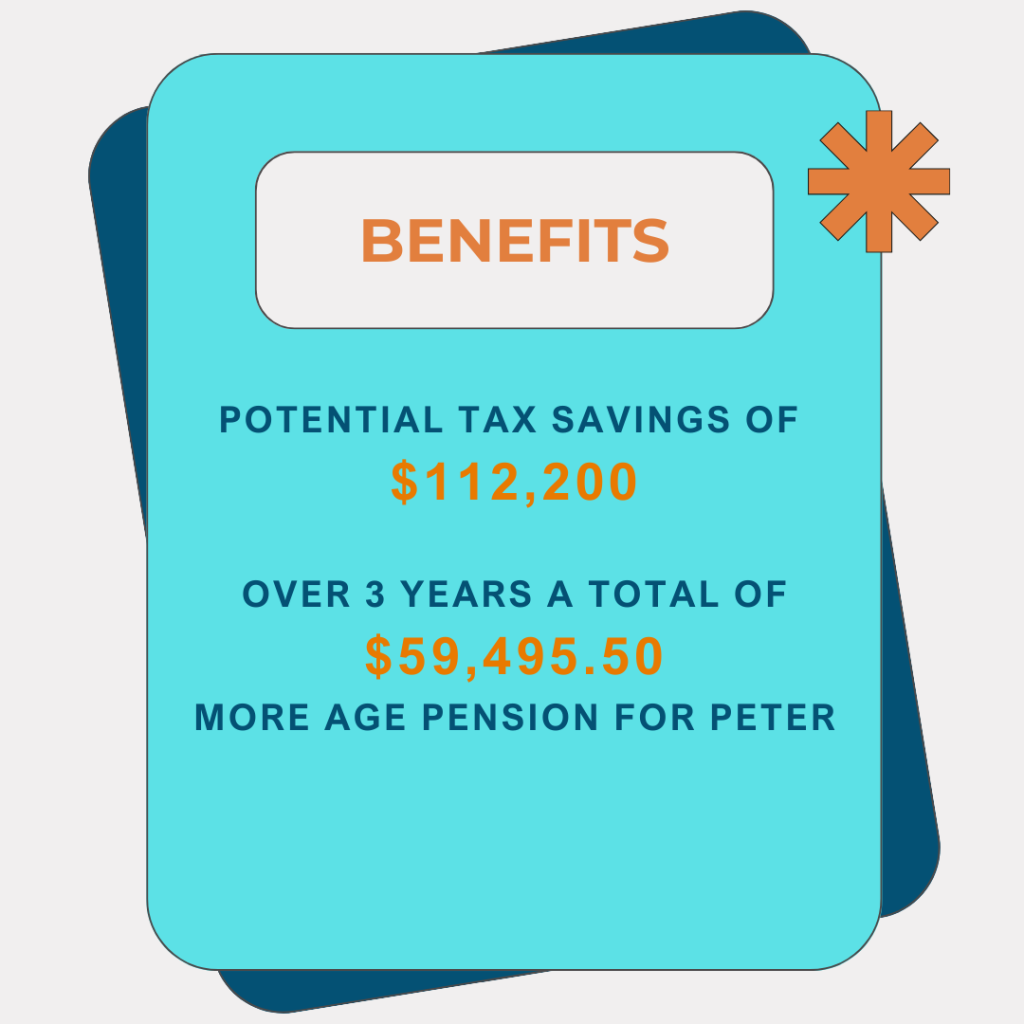
- Resulted in the couples’ combined super balance being converted to a Tax Free Component. That means a potential tax saving of $112,200 from their estate if both of them had passed away prior to implementing the strategy.
- Improves Peter’s age pension by a total of $19,816.50 per annum over the next 3 years – a total of $59,495.50 more age pension than had they continued with their strategy.
CASE STUDY ASSUMPTIONS:
- The relevant member is eligible to contribute funds to Superannuation
- Contributions made under re-contribution strategy are within Government limits
- Age pension rate based on rates and thresholds as at 20th September, 2023
Disclaimer:
The Trustee for Pereira Family Trust (ABN 25 467 180 446), trading as Lake Macquarie Financial Planning is an authorised representative and credit representative of Charter Financial Planning Ltd ABN 35 002 976 294, Australian Financial Services Licence and Australian Credit Licence No. 234665.
General Advice Warning:
This website contains information that is general in nature. It does not take into account the objectives, financial situation or needs of any particular person. You need to consider your financial situation and needs before making any decisions based on this information.
Testimonials and Case Studies:
These clients have agreed to share their story. Everyone’s situation is different, so their choices and outcomes will be different to yours. Consider your circumstances before deciding what’s right for you.